How a nursing college proved which ads produced students.
This higher education advertising case study follows a private nursing college with campuses in several states, still spending heavily on broadcast.
Book a Strategy Call−25%
Cost per start
A multi-campus college with its money in the wrong place.
Tying streaming spend to confirmed enrollments lowered a large private nursing college's cost per start 25% in four months and grew monthly ad spend from $90,000 to $250,000.
Large private nursing college
Career-focused, with campuses across several states.
Lower cost per start, then scale
The goal was to grow spend only on what could be proven.
Streaming TV, targeted tightly
Down to the program and the campus, not one national buy.
Measured against real enrollments
Reported down to the placement level.
Broadcast was producing students but couldn't say which campaigns did it.
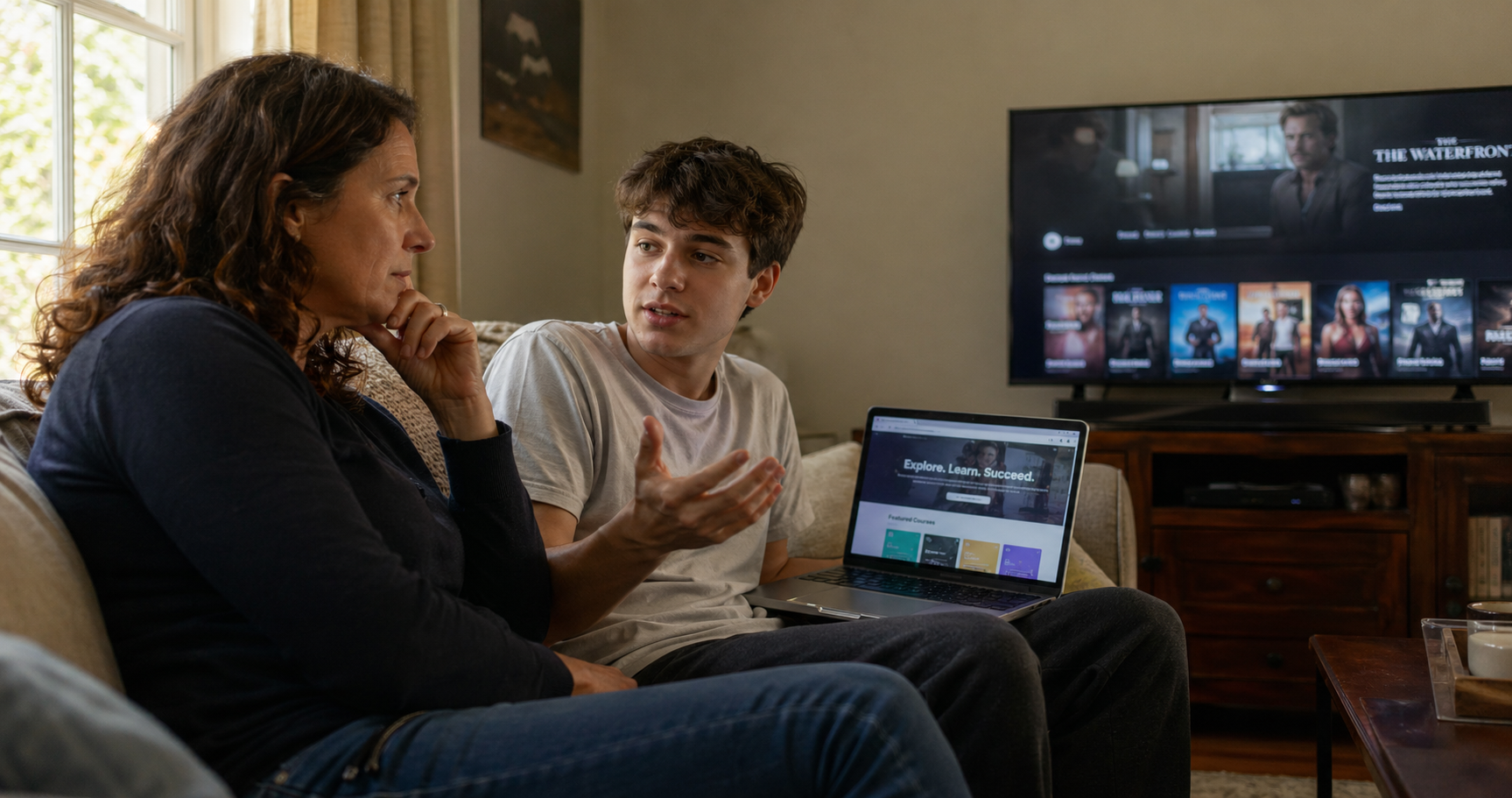
Students enrolled, but no one could trace which campaigns or markets produced those starts.
The college still spent heavily on broadcast, even though its core demographic had moved to streaming.
When you can't tell what's working, you can't scale it. They needed a partner who could tie spend to actual enrollments, then grow on what they could prove.
How we built the higher education advertising campaign.
01
Built from the college's own student data.
Targeting modeled on who actually enrolls, not a generic learner archetype.
02
Targeted down to program and campus.
Spend went to prospects likely to qualify for a specific program at a specific campus.
03
Connected to actual enrollments.
Reporting showed which campaigns drove the inquiries that became students, down to the placement.
Cost per start fell 25%, so the college nearly tripled monthly spend.
The efficiency held as the budget grew, which is the part most streaming campaigns cannot do.
−25%
Cost per start, in four months.
$90K → $250K
Monthly ad spend, three months after the lower cost per start held at scale.
Most streaming campaigns lose precision as budgets scale, and this higher education advertising case study did not. Measurement follows the IAB standardized measurement guidance for CTV.
Higher education advertising, answered.
How did the college lower cost per start by 25%?
By moving spend off broadcast and onto streaming targeted down to program and campus, then reporting against confirmed enrollments instead of impressions. Budget followed the placements that produced students, so the same money bought more starts. Every number in this higher education advertising case study is measured against confirmed enrollments.
What is cost per start?
Total media investment divided by the number of students who actually begin a program. It is the enrollment equivalent of cost per acquisition.
Why did the college grow its monthly ad spend so fast?
Because the lower cost per start held up as the budget grew, from $90,000 to $250,000 a month over three months, close to three times the starting spend. Efficiency that survives scale is what makes a bigger budget defensible.
How do you attribute an enrollment to a streaming ad?
With fractional conversions. Rather than handing the whole start to the last thing clicked, credit is split across every publisher the ad actually ran on, tied to the inquiries that became students, and reported down to the placement level.
Does this work for a school with campuses in several states?
Yes. Program and campus targeting means a nursing prospect near one campus sees that campus and that program, instead of one national message spread evenly across a footprint.
More results like this.
+48%
A national retailer lifted streaming RoAS 48% in 30 days.
Two audiences on one frequency cap, and what happened when they were split.
Read the case study →+244%
Goodwill OC lifted Lake Forest donations 244% year over year.
A donation decline reversed in the trade areas where it hurt most.
Read the case study →+20%
A top PI firm grew case volume 20% and cut cost per case 10%.
Volume and efficiency moved together once signed cases became the metric.
Read the case study →There are two ways to take the next step.
Plan your next streaming campaign.
Spend thirty minutes with our team to talk through your audience, where they spend their attention, and what streaming could actually do for your business.
Let's Talk Strategy →Audit your current streaming spend.
We review your current campaign data, identify the gaps, and walk you through what we found on a call. You leave with answers you can use.
Audit My Streaming Spend →