How Attribution Actually Works (Not the Fairy-Tale Version You’re Being Sold)
Every marketer wants the same thing: proof.
Proof your media spend is working. Proof your ads are actually driving revenue. Proof the story your vendor sells you isn’t just another black-box illusion.
But attribution?
Attribution has become the industry’s favorite magic trick. Pretty charts. Blended metrics. Vague claims of “impact.” And not a single clear answer on what actually drove the outcome.
It’s broken.
And it’s costing advertisers real money.
Let’s fix it.
The Problem: Attribution Was Built for Yesterday’s Internet
Attribution models were created when people had one device, one browser, and one predictable path.
Today? People bounce between TVs, phones, apps, feeds, logins, and walled gardens that refuse to talk to each other.
The result:
Marketers get partial stories presented as whole truths.
Vendors hide behind the gaps. Platforms lean on blended reporting. Everyone tells you they “drove the conversion,” even when they barely showed up in the journey.
Advertisers deserve better.
So How Does OTT Attribution Actually Work?
01. Identity: Who Are We Even Measuring?
Before attribution can tell you what worked, it needs to know who saw the ad.
Identity is the spine of attribution—without it, everything falls apart.
But here’s the catch:
Most platforms rely on stitched-together device IDs, probabilistic guesses, or “modeled exposure curves” that sound smart but hide the truth.
What you should expect instead:
- Deterministic IDs whenever possible
- Household-level accuracy for CTV
- Frequency tied to real engagement, not assumptions
- Transparency into where your ads actually ran — not blended junk
If your vendor can’t clearly explain their identity spine in 30 seconds?
You can’t trust their attribution.
02. Deterministic Matchback: Real Exposure, Real Outcomes
Most attribution models rely on guesses, models, or probability curves.
We don’t have to.
With deterministic matchback, we can directly confirm whether real leads or customers were exposed to your ads — no modeling, no assumptions, no black-box storytelling. It’s attribution rooted in truth.
Deterministic matchback gives you clarity on:
- Which channels introduced new customers
- Which channels reinforced consideration and moved them closer to conversion
And because the data is anchored in actual exposure (not modeled impressions) you get a clear read on what worked, what didn’t, and what to do next.
03. Pathing: The Real Customer Journey (Not the Pretty One in Slide Decks)
The customer journey is messy.
Attribution needs to reflect that.
Real path analysis shows:
- Which channels close
- Where frequency tips from helpful → wasteful
- Where audiences stall or drop off
What most vendors show instead:
- A single path
- A flattering story
- A recommendation that—shocker—always leads to buying more from them
Attribution shouldn’t serve the seller.
It should serve the advertiser.
04. Revenue Alignment: If It Doesn’t Tie to Money, It Doesn’t Matter
Clicks are not revenue.
Completion rates are not revenue.
“Brand lift” without real dollars attached is a vanity metric.
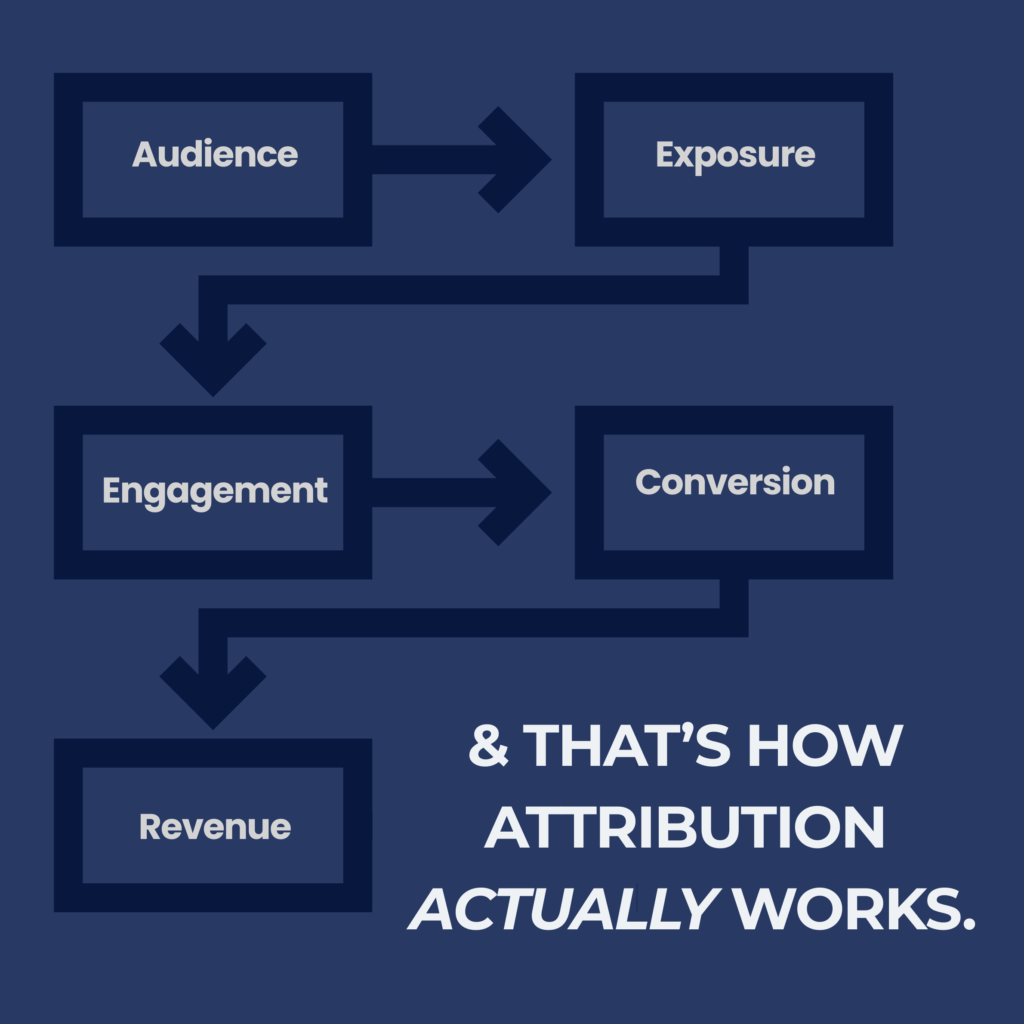
True attribution ties platform exposure → audience behavior → measurable business outcomes.
That means:
- Store visits
- Add-to-carts
- Email captures
- Purchases
- Lifetime value
- Churn reduction
- Subscription starts
If your attribution stops at “the campaign performed well,” it’s not attribution.
It’s PR.
Where Attribution Breaks—and How We Fix It
Most attribution collapses in three places:
01. Bad data in → bad data out
If the identity layer is a mess, no model can save it.
02. Black-box reporting
When vendors refuse to show the full picture—where ads ran, where they didn’t run, and what was wasted—you’re working blind.
03. Incentives misaligned with outcomes
If your vendor benefits from inflating performance, guess what they’ll do?
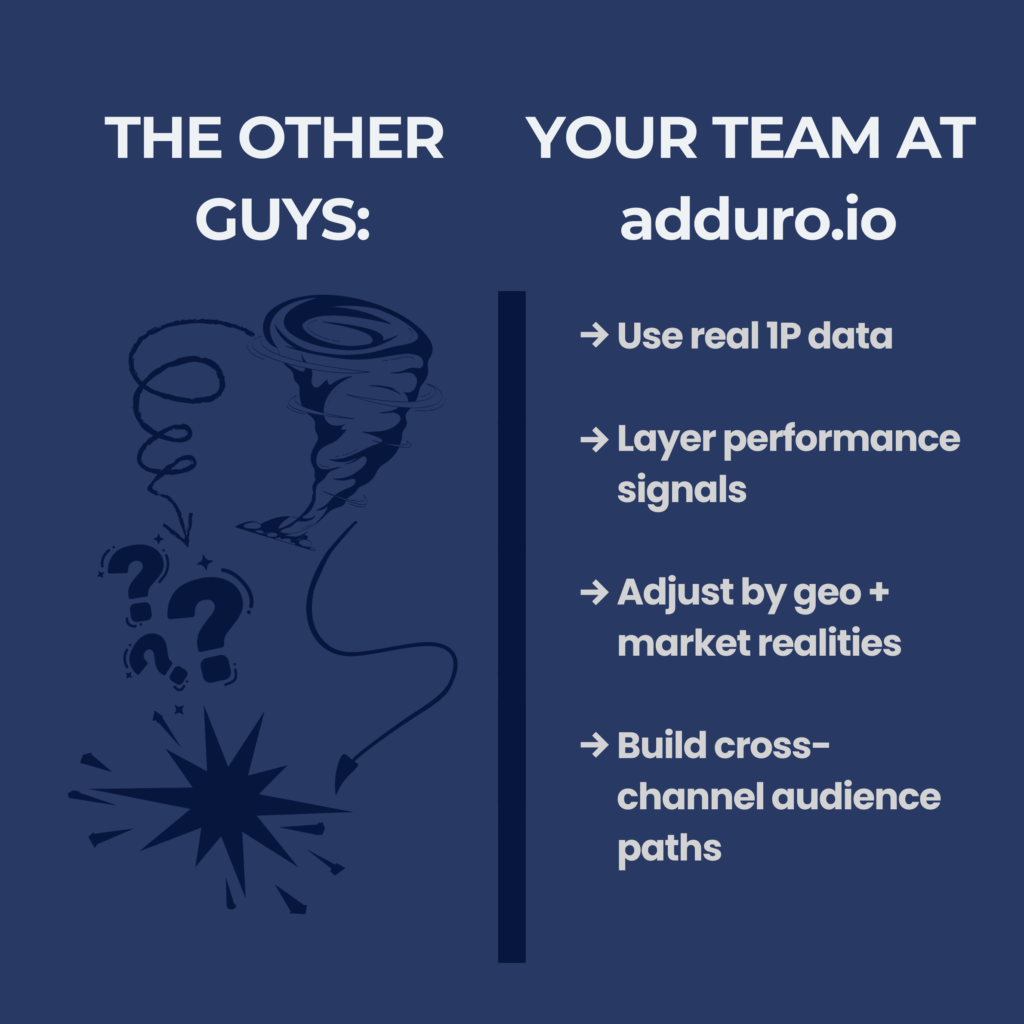
At adduro.io, attribution is built the way it always should’ve been:
Transparent, accountable, tied to real results, and designed to fix what the industry broke.
The Takeaway: Attribution Isn’t Complicated—It’s Just Been Overcomplicated
Attribution is simple when you remove the BS:
- Get clean identity
- Measure real lift
- Map actual journeys
- Tie everything to revenue
- Show every detail—no black boxes
Advertisers don’t need more dashboards.
They need clarity.
They need truth.
They need performance that can be proven, not pitched.
That’s the future of attribution.
And it’s already here.